
Does your PET plastic product fail prematurely under hot and humid conditions? Why do seemingly stable and durable materials suddenly become fragile, prone to cracking, or even degrade? In fact, the core reason behind this is PET hydrolysis, a chemical reaction significantly accelerated by high temperature and high humidity, which is also a hidden killer of many PET products' short lifespan.
PET plastic (polyethylene terephthalate) has already penetrated into every aspect of our lives due to its excellent stability, transparency, and recyclability. But many people don't know that it will quietly undergo hydrolysis reactions in high temperature and high humidity environments, gradually destroying its polymer structure and ultimately losing its mechanical properties.
For a long time, the application scenarios of PET materials have widely covered various fields of life and industry, from daily drinking water bottles, food packaging, to clothing fibers, industrial films, and engineering components. Its practical value has been widely recognized by the industry. PET has always been regarded as a typical representative of "stability and durability" in the industry, and it is generally believed that it can maintain stable performance for a long time. However, in practical industrial applications, when PET products are subjected to harsh environments of high temperature and humidity, rapid degradation occurs. The originally stable and sturdy material gradually becomes fragile, and even fractures under slight stress. This phenomenon has made the industry realize that in-depth research on the hydrolysis principle of PET and exploring effective solutions are of great significance for extending the service life of PET products and reducing industry losses.selectHyMax ® Series of anti hydrolysis agentsIt can fundamentally block the self catalytic hydrolysis cycle of PET, which is also the core intention of Langyi New Materials' deep cultivation of polyester modification.
01.
What is the core mechanism of PET hydrolysis
Many people mistakenly believe that PET will "melt" or "rot" in water, but this is not the case - PET hydrolysis is a precise chemical reaction, with the core being the directed attack of water molecules on polymer chains, and high temperature will become the "catalyst" for this reaction.
PET, as a polyester material, has a molecular skeleton composed of a large number of repeated ester bonds. These ester bonds are relatively stable in normal temperature and humidity environments, but when the ambient temperature and humidity increase, water molecules become highly aggressive, actively inserting into the ester bonds and breaking them, cutting the originally long polymer chains into countless short chains.
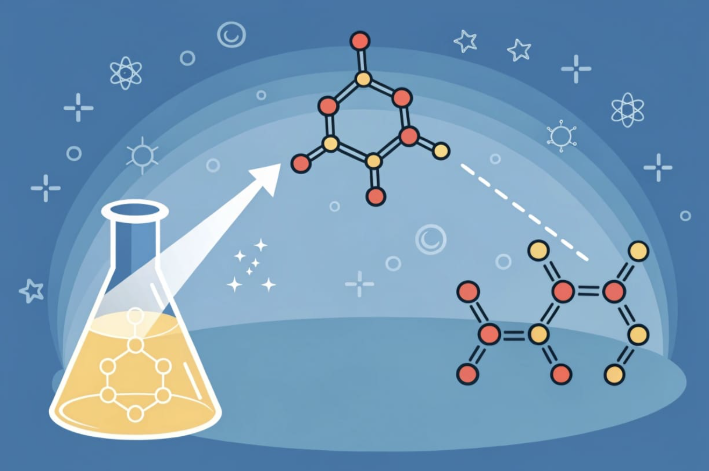
More importantly, this reaction has self catalytic properties: the carboxylic acid end groups generated during the reaction process further accelerate the cleavage of ester bonds, forming a "degradation acceleration cycle". To give a simple analogy, the polymer chain of PET is like a long string of beads, and the hydrolysis reaction is like repeatedly cutting the string of beads at different positions, ultimately turning the originally intact long string into countless scattered short strings.
The shortening of polymer chains directly leads to a decrease in the molecular weight of PET materials, resulting in the loss of core mechanical properties such as strength and toughness. This is also why PET water bottles placed in high-temperature vehicles become brittle over time; The PET film exposed to steam environment will gradually lose its integrity and cause damage. Understanding this mechanism is the first step in solving the PET hydrolysis problem.
When it comes to PET, many people's first reaction is water bottles, but its application range is much wider than we imagine. As an important pillar of modern materials science, PET has penetrated into multiple industries due to its excellent strength to weight ratio, transparency, gas barrier performance, and recyclability.
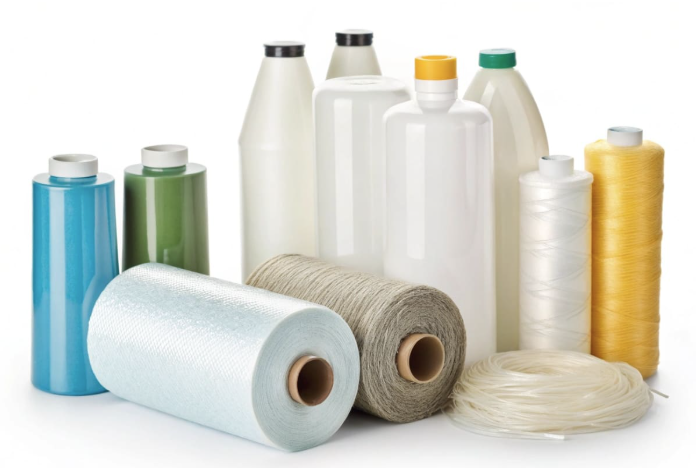
① Food and beverage packaging: This is the most common application scenario for PET. Whether it's bottled water, soft drinks, cooking oil, or hard packaging for foods such as peanut butter and salad dressing, many are made of PET material. Its excellent gas barrier performance can effectively block oxygen and carbon dioxide, helping to extend the shelf life of food and beverages.
② Textile fiber: One of the earliest applications of PET was in the textile field, also known as "polyester fiber". This type of fiber has high strength, wear resistance, and is not easily deformed, and is widely used in products such as clothing, carpets, and industrial textiles.
③ Film and Engineering Applications: PET film has high tensile strength and dimensional stability, and is commonly used in products such as magnetic tapes, photographic films, solar panels, etc; At the same time, its lightweight and sturdy characteristics also make it applicable in some engineering components, especially in scenarios where lightweight and durability are required.
Because PET is widely used, solving its hydrolysis problem and extending product life can not only reduce production costs for enterprises, but also promote the sustainable recycling of PET materials.
Application Type | specific example | Main PET characteristics |
packaging | Beverage bottles (water, soda), food cans, bubble wrap packaging | Transparency, anti-virus, lightweight, recyclable. |
Fiber/Textile | Clothing, carpets, furniture, industrial fabrics (such asBelt delivery) | High tensile strength, wrinkle resistance, durability, low moisture absorption. |
movie | Photographic film, magnetic tape, electrical insulation materials, solar panel backplate | High mechanical strength, dimensional stability, optical clarity, and electrical insulation. |
engineering | Automotive components (such as shells, connectors), switchgear | Good mechanical performance, electrical insulation, heat resistance (when reinforced). |
medical care | Surgical implants (temporary), medical tubes | Biocompatibility and Sterilizability. |
Faced with the hydrolysis problem of PET in high temperature and high humidity environments, many people may feel helpless, but in fact, through scientific methods, it is completely possible to effectively delay or even inhibit the hydrolysis reaction and extend the service life of PET products.
Based on years of practical experience, we have summarized the following core solutions, among which the use of anti hydrolysis agents is the most direct and effective way:
① AddHyMax ® Anti hydrolysis agentThis is the core means of combating PET hydrolysis, HyMax ® The anti hydrolysis agent is a carbodiimide compound that can react with carboxylic acids produced by polymer decomposition to generate stable urea based compounds without side effects. Thereby preventing the hydrolysis of polymers and extending their service life.
Especially in the application of recycled PET (rPET), the role of anti hydrolysis agents is more critical - rPET has already experienced high temperature environments during early use and recycling processes, resulting in an increase in the number of polymer chain ends, making it more prone to hydrolysis during subsequent use. The combination of anti hydrolysis agents and chain extenders can effectively compensate for this deficiency.
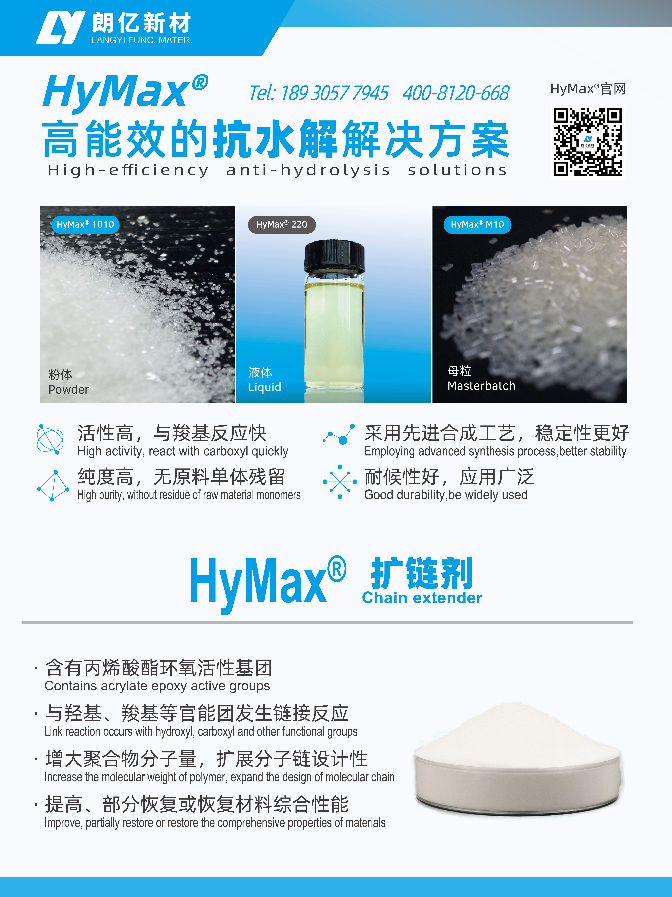
② Optimizing processing conditions: Drying treatment before PET processing is crucial, as any residual moisture will intensify hydrolysis during the melt extrusion process. Therefore, it is necessary to ensure thorough drying before processing; At the same time, optimize the processing temperature and minimize the temperature while ensuring the fluidity of the melt, in order to reduce the breakage of ester bonds during the processing.
③ Source control of moisture content: During the production, storage, and transportation of PET, desiccants are used to reduce the environmental moisture content, avoiding the material from being in a high humidity environment for a long time and reducing the triggering conditions for hydrolysis reactions from the source.
By combining the above methods, the hydrolysis resistance of PET material can be significantly improved, ensuring its stable performance even in harsh environments with high temperature and humidity, and extending the product's service life.
strategy | mechanism | The benefits of solving hydrolysis problems |
HyMax ® Anti hydrolysis agent | Reacts with carboxylic acids produced by polymer decomposition to generate stable urea based compounds without side effects | Prevent the hydrolysis of polymers and extend their service life |
chain extender | Reconnect broken polymer chains to increase molecular weight | Improve mechanical performance, especially suitable for recycled PET (rPET)) |
Thoroughly dry | Remove moisture from PET particles before processing | Minimizing water availability during high-temperature processing to prevent hydrolysis |
Optimize processing conditions | Reduce the melting temperature and shorten the residence time inside the extruder | Reduce energy input for accelerating hydrolysis |
Barrier coating/encapsulation | Prevent PET from coming into contact with external moisture | Physical barriers of hydrolysis agents for specific applications |
The hydrolysis of PET in high temperature and high humidity environments is the core challenge that restricts the service life of PET products, but its essence is preventable and treatable - the key is to understand the hydrolysis mechanism and find scientific solutions.
As a multifunctional and widely used material, PET's hydrolysis problem is not insurmountable. By adding anti hydrolysis agents, optimizing processing conditions, and controlling moisture content at the source, the hydrolysis reaction can be effectively suppressed, enhancing the durability of PET materials. Whether in enterprise production or practical application, as long as we pay attention to the issue of PET hydrolysis, we can avoid premature product failure, reduce losses, and promote the sustainable development of PET materials.
If you are troubled by the hydrolysis aging and insufficient service life of PET products, you may want to learn about HyMax, a professional product of Langyi New Materials ® Anti hydrolysis solutions can be consulted and connected at any time to customize efficient protective formulas and technical support for you.